How do pets affect upholstery fabric over time?
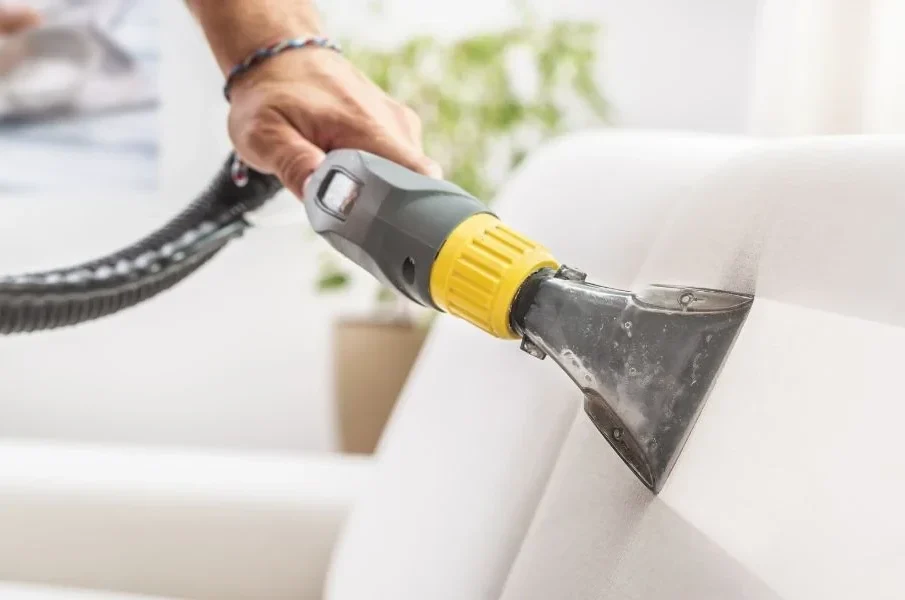
Pets affect upholstery fabric over time by snagging threads with their claws, darkening fibres with coat oils, thinning cushion edges through repeated scratching, and weakening the weave with everyday moisture. A dog settling into the same corner each evening or a cat kneading one cushion daily concentrates all four changes onto a few small zones, which is why favourite spots age years ahead of the rest of the piece. Regular Upholstery Cleaning Brisbane care interrupts each of these slow changes while the fabric can still recover fully.
Claws snag woven threads
Claws snag woven threads by hooking under a loop during kneading or climbing and pulling it clear of the weave. A single pulled loop looks harmless, yet every snag leaves a weak point behind. Neighbouring threads then shift into the gap, and the fabric surface slowly loses its even face. Loop pile fabrics show this earliest because raised loops catch claws readily, while flat weaves resist a little longer before fine pulls appear. Trimmed claws reduce the pace, though contact itself never fully stops.
Fur oils darken fabric
• Daily oil transfer
Daily oil transfer moves natural coat oils onto the seating each time a pet makes contact. Favourite resting spots absorb a fresh layer daily, and armrests or cushion centres shade first under regular body pressure. A pet sleeping in one place for hours leaves far more behind than brief visits ever would, so darkening always follows the animal’s habits around the room.
• Dust bonding effect
Dust bonding effect turns those oil patches darker because airborne particles cling to oily fibre far quicker than to clean fibre. Together, the two form a grey film that ordinary vacuuming never lifts, and the patch spreads a little wider each week. Extraction cleaning dissolves this film at the fibre level and restores true colour before the change turns permanent.
Scratching thins cushion edges
Scratching thins cushion edges by working the identical patch of fabric every time a pet returns to its corner. Cats stretch against sofa arms, dogs paw at seat fronts before settling, and the repeated friction wears those zones far faster than the rest of the piece. Edges and corners carry the least fabric tension, so worn patches there spread quickly once they open. A sofa can look full and healthy across the back while its front corners turn threadbare. Attention to these zones during routine care slows the wear considerably, and fabric kept free of grit resists friction damage much longer.
Moisture weakens fibre bonds
Moisture weakens fibre bonds by soaking into cushions through damp paws, wet noses, and drool during everyday contact. Fibres swell as moisture enters and contract as they dry, and hundreds of these cycles gradually loosen the internal structure that gives fabric its strength. Weakened fibres stretch out of shape, sag across seat fronts, and tear more easily under claws. Padding underneath also holds dampness longer than the surface, which ages cushions from within. Thorough extraction removes moisture and residue together, letting fibres keep their original strength.
Pets change upholstery through four slow forces working together, and each one targets a different layer of the fabric. Claws open the weave thread by thread, coat oils and dust build a grey film across resting spots, repeated scratching wears sofa arms and seat fronts thin, and daily moisture softens the fibre structure from within. A favourite corner can carry all four at once, ageing faster than any other part of the room.